Category Archives: blog post

The Leader’s Quick-Start Guide to Clarity, Compassion, and Results

A split-color background of soft blue and yellow displays a visual metaphor: wooden blocks with black arrows move in a straight line across the blue side, ending at a block with a question mark. From there, on the yellow side, blocks with arrows branch upward and downward, suggesting decision-making and multiple possible paths.

Find what you need to lead with clarity, compassion, and confidence. You care about your team. You care about results. But some days, leadership just feels heavier than it should. Whether you’re holding back because you don’t want to hurt someone—or pushing hard and not getting the response you hoped for—this guide will help you

The Leader’s RESET: How to Handle Difficult Conversations with Empathetic Accountability

A leader I coach recently described a frustrating pattern. During a critical planning session, she saw her engineers and Scrum Masters repeatedly stepping in to cover missing work from product managers who were on planned leave… work that should have been completed in advance. While she was grateful for the stopgap effort, she recognized this

The Architecture of Repair: A 5-Step Protocol to Operationalize Conflict Resolution

How to move your team from “who is to blame?” to “how do we fix it?” using restorative principles. Conflict is not just an HR issue; it is operational drag. When trust fractures in a high-performing team, information flow slows down, decision-making creates friction, and innovation stalls. Most managers default to one of two modes

The Leader as Regulator: A Practical Guide to Navigating the Change Dip

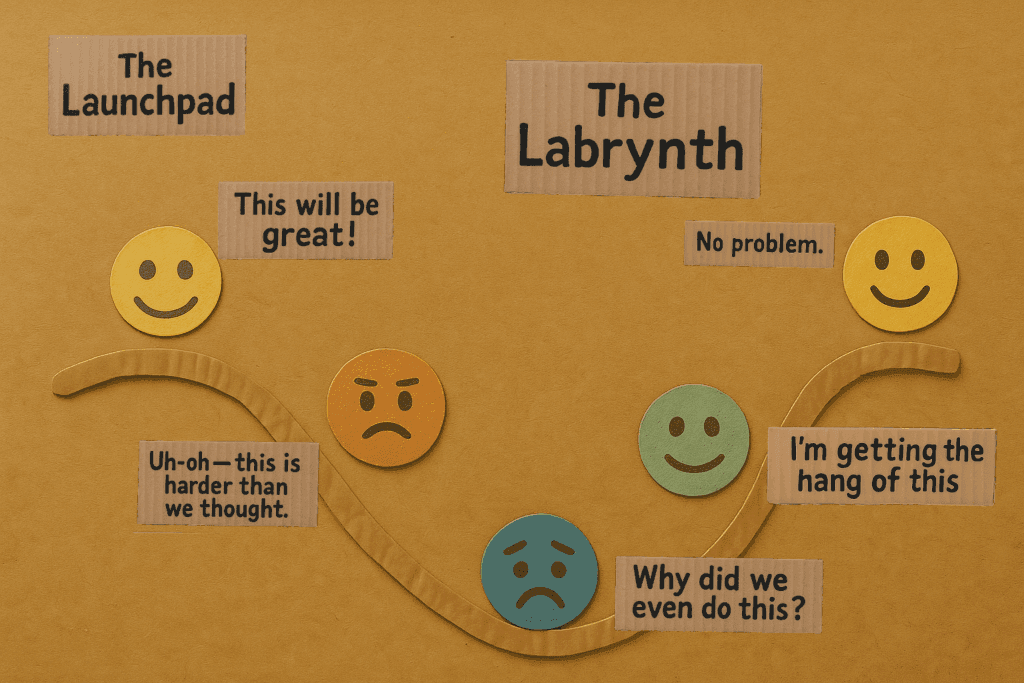
Summary: When change moves faster than our team’s capacity to adapt, leaders need more than resilience—they need the skills of a Leader as Regulator. This post explores the predictable performance “Change Dip,” the observable data that shows your team is stuck in “The Labyrinth,” and provides a Leader’s Diagnostic Toolkit to restore performance by rebuilding

Do Jerks Get Hired for Management? A Look at Empathy vs. Toughness

Split-screen image of two men in professional attire, blended at the center. The man on the left is smiling, warmly lit, and positioned in a bright open-plan office, representing empathetic leadership. The man on the right has a neutral expression and stands in a cooler-toned, darker boardroom, representing a tougher management style. A quote appears in the top right: “The best managers aren’t soft or cutthroat—they’re clear, compassionate, and firm.”

Inspired by Dave Anderson’s article at Scarlet Ink. The Leadership Myth Whether we say it aloud or not, the intuitive wisdom about leadership (which clearly grew out of the machoism of the mid-twentieth century) is that tough leaders get ahead, but empathetic ones get ignored. It’s such old thinking that it feels instinctive: forceful personalities

Hands Off, Mind In: Presence, Not Pressure.

Focused woman leaning forward at her desk, calmly engaged —present and attentive without intervening.

Summary: This article explores the concept of “mind-in, hands-off” leadership—a way of managing that prioritizes presence over control. Drawing on personal examples and the influence of Katharine Graham’s leadership style, it emphasizes the value of staying mentally engaged without micromanaging. The article also discusses how this same mindset applies when working with generative AI: true

Why Empathy Is the Leadership Advantage Today

Summary This article unpacks key findings from Why Empathetic Leadership Matters Now More Than Ever and explains how leaders can turn research into practical strategies for managing performance with empathy and accountability. Table of Contents Why Do People Care So Much About Empathy in Leadership? This article is about something you probably already know in

Self-Promotion Can Be Both Accountable and Empathetic

A thoughtful team member updates a whiteboard, symbolizing leadership through clarity, accountability, and quiet communication.

If you struggle to talk about your accomplishments without feeling uncomfortable, you’re in good company. For many professionals, self-promotion can feel like boasting, bragging, or stealing attention from others. But there’s a more generous way to think about it: valuable self-promotion lives at the intersection of empathy and accountability. It’s about making your contributions visible