
Find what you need to lead with clarity, compassion, and confidence. You care about your team. You care about results. But some days, leadership just feels heavier than it should. Whether you’re holding back because you don’t want to hurt someone—or pushing hard and not getting the response you hoped for—this guide will help you
Author Archives: Amy Kay Watson

01
Nov
Nov
A leader I coach recently described a frustrating pattern. During a critical planning session, she saw her engineers and Scrum Masters repeatedly stepping in to cover missing work from product managers who were on planned leave… work that should have been completed in advance. While she was grateful for the stopgap effort, she recognized this

01
Nov
Nov
Product spilled across a production floor and the line went down. The manager (I’ll call her Dana, not her real name) was already behind. When the maintenance tech arrived, she snapped at him. Later she went and found him. “I was short with you, and that wasn’t fair. The spill wasn’t on you. I’m sorry.”

27
Oct
Oct
There is no excerpt because this is a protected post.
15
Oct
Oct
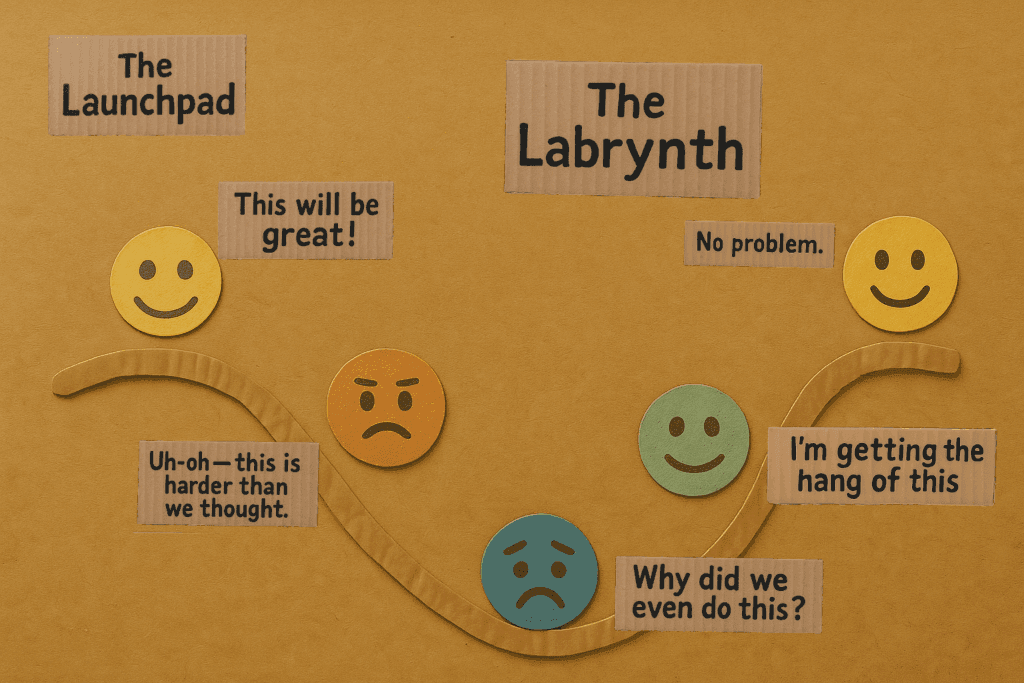
Summary: When change moves faster than our team’s capacity to adapt, leaders need more than resilience—they need the skills of a Leader as Regulator. This post explores the predictable performance “Change Dip,” the observable data that shows your team is stuck in “The Labyrinth,” and provides a Leader’s Diagnostic Toolkit to restore performance by rebuilding


03
Oct
Oct
There is no excerpt because this is a protected post.

26
Sep
Sep
There is no excerpt because this is a protected post.

20
Sep
Sep
There is no excerpt because this is a protected post.

23
Aug
Aug
There is no excerpt because this is a protected post.